Diabetes Canada Conference Recap: Key Insights & Case Studies
At the 2025 Diabetes Canada/CSEM Professional Conference, Dexcom Canada invited healthcare providers to look beyond glucose numbers and explore how real-time continuous glucose monitoring (rtCGM) can turn data into meaningful patient action. Through live discussions and real-world case studies, Dexcom Canada showcased how rtCGM empowers personalized care and measurable improvement in health outcomes.
From insights to outcomes:
how Dexcom rtCGM can customize care and empower patients
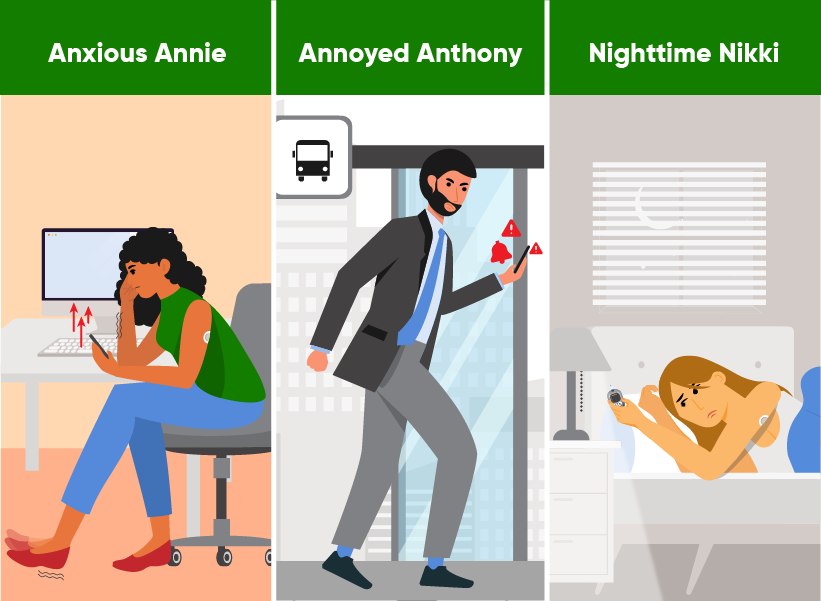
At the Dexcom Canada interactive booth, healthcare providers engaged in collaborative problem-solving through three case studies, each represented by a fictional character facing a common challenge in diabetes management: Annie, Anthony, and Nikki. Each case invited clinicians to consider what drives a patient’s behaviour, which Dexcom rtCGM feature could support them more effectively, and how personalized guidance can lessen the burden of diabetes management and help patients reach their goals.
Anxious Annie (Type 1 Diabetes)
Annie becomes anxious at the first sign of rising glucose and often overcorrects with insulin, leading to frequent lows.
Consider: How can clinicians guide anxious patients to interpret glucose data calmly and avoid reactive dosing?
Annie’s case illustrates how using an rtCGM device, such as the Dexcom G7 with customizable alerts like the Delay 1st Alert, can help patients interpret their glucose data more confidently and make more measured adjustments.
Annoyed Anthony (Type 2 Diabetes)
Anthony is frustrated by constant notifications and has turned off his alerts entirely.
Consider: How can alert settings be optimized to sustain engagement while maintaining safety?
Anthony’s case underscores the importance of customizable alert settings, such as Delay 1st Alert and Quiet Modes, that preserve engagement while minimizing alert fatigue.
Nighttime Nikki (Type 2 Diabetes)
Nikki worries about overnight lows and often eats before bed “just in case.”
Consider: How can rtCGM data reduce fear-based behaviour and improve glycemic control overnight?
Nikki’s scenario focuses on low alert features, such as the predictive Urgent Low Soon Alert, and on overnight data visibility, which help patients sleep better and maintain stable glucose levels throughout the night.
Empowered patients, improved health outcomes
Real-time continuous glucose monitoring technology, such as Dexcom G7, is supported by a robust and growing body of clinical evidence demonstrating its impact on effective diabetes management. Studies show that rtCGM helps improve A1C and increase time in range (TIR),1-5 while also delivering meaningful benefits in daily life. Research also indicates that when people living with diabetes can clearly see and understand their glucose patterns, they gain confidence in self-management, leading to greater satisfaction with their diabetes care.6
Data from the long-term COMISAIR7,9 study reinforces these findings, showing that rtCGM helps reduce glycemic variability, lowers the risk of hypoglycemia, and supports sustainable, long-term improvements in glycemic control.
Additional benefits of Dexcom rtCGM in diabetes management:
- Individuals switching from traditional blood glucose meters (BGM) to rtCGM can improve their A1C and spend more time in range.1-5
- Real-time data helps individuals to make effective glucose management decisions.1-5 Dexcom G7 can help people see where their glucose levels have been and where they’re going, so they can take proactive action to manage them.
- Integration with leading insulin pumps enables automated insulin delivery (AID) based on real-time glucose readings, reducing the need for manual dosing and overnight adjustments.11-14 Diabetes Canada recommends AID should be used for all individuals living with T1D to lower A1C, increase TIR, reduce hypoglycemia, and improve quality of life.15
With connectivity, context, real-time data, and predictive insights, Dexcom rtCGM Systems empower patients and healthcare providers to take a proactive approach to diabetes management. Dexcom rtCGM reduces daily burden, improves long-term outcomes, and gives healthcare providers confidence in prescribing a system backed by robust clinical evidence.
Explore more clinical insights and tools to support patient care at the Dexcom Education Hub.
1 Beck RW, et al. JAMA. 2017;317(4):371-378.
2 Beck RW, et al. Ann Intern Med. 2017;167(6):365-374.
3 Martens T, et al. JAMA. 2021;325(22):2262-2272.
4 Laffel LM, et al. JAMA. 2020;323(23):2388-2396.
5 Welsh JB, et al. J Diabetes Sci Technol. 2024;18(1):143-7.
6 Clark TL, et al. Diabetes Technol Ther. 2024;26(10):700-8.
7 Soupal J. Comparison of Different Treatment Modalities in 7 Years of Follow-up. Presented at: EASD 2023; October 2, 2023; Hamburg, Germany.
8 Lind N, et al. Diabetes Care. 2024;47(5):881-889.
9 Šoupal J, et al. Diabetes Care. 2020;43:37-43.
10 Heinemann L, et al. Lancet. 2018;391(10128):1367-1377.
11 Brown SA, et al. N Engl J Med. 2019;381(18):1707-1717.
12 Brown SA et al. Diabetes Care. 2021;44(7):1630-1640.
13 Russell SJ, et al. N Engl J Med. 2022;387(13):1161-1172.
14 Sherr JL, et al. Diabetes Care. 2022;45(8):1907-1910.
15 Halperin IJ, et al. Can J Diabetes. 2025;49(1):5-18.